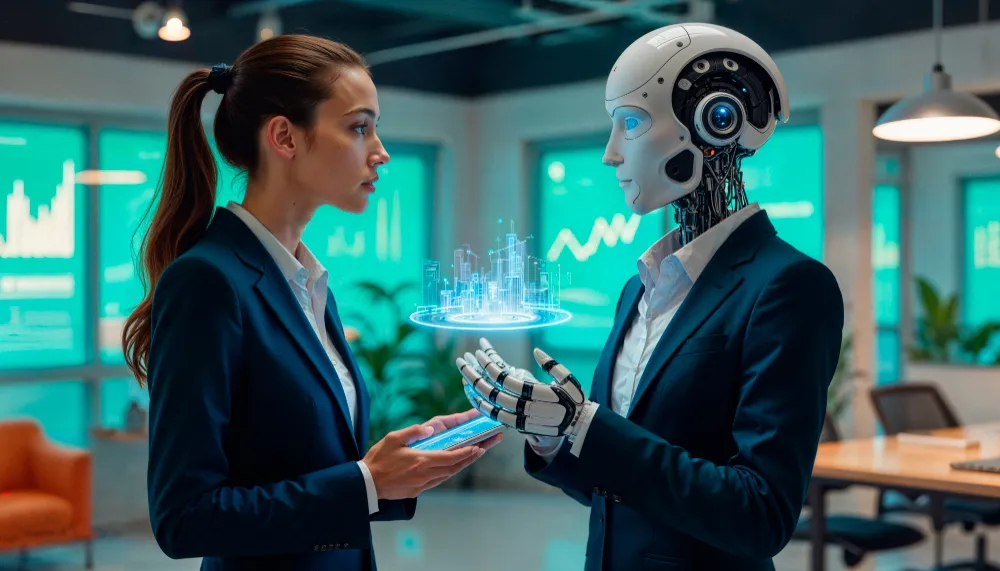
The IT sector is undergoing one of its most profound transformations, driven by rapid advances in AI, automation, and agentic workflows that are reshaping how work is structured and who does it. Entry-level roles, once defined by repetitive tasks and manual execution, are being automated, forcing organizations to rethink how early-career talent gains meaningful experience and how senior experts are leveraged. At the same time, AI is moving from a “nice-to-have” experiment to a foundational layer of products, platforms, and people operations, especially in areas like hiring, performance management, and learning and development.
I interacted with an industry expert and collected their thoughts. Read what they have to say...
Josh Liff, Director of Product Science at Hirevue:
AI is causing organizational shifts with entry-level talent
There’s been a big shift happening with entry-level talent and skills. Advancements in automation have upended certain entry-level jobs, like software development, because more things can be automated while organizations rely on the expertise of their more advanced developers. This raises questions about how people entering the workforce can gain the skills they need to be productive and build their careers. I think that in 2026, we’re going to see organizational shifts happening to address this.
Addressing AI reluctance
There’s a reluctance from some organizations to use AI in different capacities. Some of that is due to compliance fears, and some of it is general resistance to change. But it’s important for organizations to understand that AI doesn’t replace humans; it’s only effective if we can find an optimal combination of human and AI agents. As developers, we need to make sure that what we’re designing addresses that reluctance and that we’re building responsible AI that meets regulations and provides transparency.
If organizations aren’t fully committed to adopting and learning these new technologies, it really limits their effectiveness.
In the hiring process, candidates need to know where the technology is being used and why. If you’re going to interact with an AI agent in the interview process, having transparency up front on how the process will go and how fairness is built in sets the candidate up for a good experience. On the flip side, not providing that transparency sets them up for a negative experience. As these tools become more ingrained in hiring, it’s become really important that organizations have a plan for how fairness is monitored and what human oversight will look like, because that clarity will build trust in these systems and reduce anxiety.
You have to reduce uncertainty to get to full-on adoption in different places. People want evidence that something works and that it’s not causing harm, it’s making things better. As developers, we need to find ways to test and address different concerns and limit risks to get the most potential out of them. As we get through these barriers, and people will inevitably adapt, teams will figure out how to be more productive and have a multiplying effect. Companies that figure out how to effectively harness AI will be able to scale productivity without increasing demand on workers.
Closing the gap between AI capabilities and usage
With the rapid pace of LLM and agentic development, there’s still a big gap between the capabilities of these systems and organizations' understanding of how to use them. Most are a lot more advanced than how the end user is utilizing them today. In 2026, I think we’re going to start seeing a closing of that gap. For example, in hiring, both candidates and recruiters are using AI, so processes have really radically transformed, and we’re still catching up and trying to understand the ideal ways to assess candidates and evaluate different skills now that so much has changed with AI and technological advancements becoming a part of work.
Kathleen Preddy, Director of Data Science at Hirevue:
Organizations are rethinking how work gets done
Because of the increased adoption in the workplace, organizations are rethinking how work is going to get done with the resources now available to them. There has essentially been a decoupling of the work that needs to get done from employment. Organizations are now asking, is this something that can be automated with an AI agent, or is there somebody already managing an AI agent that can reasonably do this work? Companies are streamlining processes, allowing their workers to focus their time on more valuable work.
AI is at a tipping point
My entire career has been spent in natural language processing, so I’ve seen a lot of shifts over the years. Through the process of innovation, you often end up with a cool new technology, but then you have to figure out how to use it, how to apply it effectively, what its limitations are, what its capacity is, and how to embed it into real solutions. That process usually takes a few years to shake out, and I think we’re at that point with these large language models (like ChatGPT) where we know the technology is impressive at doing what it does, but we’re learning how to apply it. I think we’re at a tipping point where this year we’re going to see AI agents more fully integrated into our other tools and systems. They’ll be able to see all the work we’re doing, contextualize that, and make suggestions, with humans making final decisions. Basically, simplifying the process so it feels seamless and not like you’re interacting with a robot, but just efficiently working. I think in 2026 we’ll see a lot of basic work tasks being automated through agentic workflows, enabling humans to be more effective in their jobs and focus their time and energy on the work that they are uniquely equipped to do.
Colin Willis, Program Manager of Product Science at Hirevue:
AI will allow HR teams to individualize the employee experience
Today, we can really use AI in creative ways to create richer data sets at scale than we ever have before. For example, there are now interview tools that allow you to completely streamline the interview process. You share the kinds of questions you want candidates to be asked, the tool will build out your questionnaire or interview guide for you, schedule interviews, conduct interviews, collect the data, synthesize it, and develop a report for you. If you think about all of the HR applications for that, it’s incredible. We could run more effective performance management conversations, have richer data coming in for employee feedback, and so much more. That’s how we can really get down to making an individual-level impact with employees like we never have before. We can also build really rich on-the-job learning experiences, when trying to do something new on the job, and you have AI helping you to learn that task and providing feedback and pointers on how to do it better.
Embracing AI as the ground floor
Where we need to go next is really embracing that AI is the ground floor. I think that’s something we’re still wrestling with as a society. If you think about the advent of the internet and where it is today, it’s become a basic minimum requirement for life. I think we’re going to see that happen with AI as well, where it becomes the minimum design requirement for things of the future. That includes what candidates are doing and what organizations are doing to evaluate candidates. Organizations need to embrace the idea that AI is the ground floor and start redefining what a good candidate looks like, when they are using AI to write resumes and prepare for interviews. Part of that is embracing AI as a new skill set and figuring out how to evaluate that skill set as part of our measuring practices.
Experimentation with AI in new areas
AI is popping up in different areas of the talent lifecycle than we’ve traditionally seen. That is an extension of organizations wanting to experiment with AI and related technologies that feel safe to them. We’re going to see that experimentation in lower-stakes areas first, like L&D, before we start seeing the adoption in higher-stakes decision-making, like performance management.
J.L. Graff, Ed.D., MBA, Associate Dean at University of Phoenix College of Business and Information Technology
Growing Importance of IT and Cybersecurity Roles/Skills
The growing dependence on digital systems has accelerated demand for professionals who can manage both IT operations and cybersecurity responsibilities. As organizations face increasing cyber threats, data breaches, and system vulnerabilities, the need for talent that understands both technology infrastructure and security protections has surged. This has widened the skills gap and pushed employers to seek hybrid professionals who can support networks, troubleshoot systems, and secure digital environments simultaneously. This shift is reaching far beyond tech companies, as industries like healthcare, finance, manufacturing, education, and government now require IT professionals with solid cybersecurity skills. Recent developments show security becoming embedded into nearly all IT roles, creating positions that blend system administration, networking, cloud support, and threat mitigation. Looking ahead, this hybrid skill set will become even more valuable as organizations adopt AI and data-driven tools, requiring IT professionals who can also interpret risks, protect data, and support emerging technologies.
Governance is on the Rise
Interest in governance is growing as organizations recognize its role beyond basic compliance. Effective governance helps manage large volumes of data, improve analytics, and support stronger business decisions. Its importance is increasing as AI becomes embedded in daily operations, requiring oversight to ensure systems are transparent, reliable, and aligned with ethical and organizational standards. These practices help reduce risk and promote responsible AI use. Jobs in governance, cybersecurity, and data oversight are in high demand because organizations need experts who can manage complex data environments, ensure responsible AI use, and strengthen security defenses. As businesses generate more data and adopt advanced technologies, they rely on professionals who can create structured processes, maintain data integrity, and support informed decision-making. The rise of AI further increases the need for specialists who can ensure systems are transparent, trustworthy, and aligned with ethical and organizational standards. At the same time, human judgment is critical as AI makes social engineering attacks more convincing. Together, these factors drive strong and growing demand for skilled professionals in these areas.
Growing Popularity of Digital Badges
Digital badges are growing in popularity because they offer learners a fast, trustworthy way to highlight verified skills and increase their chances to break into or advance in the field of IT. They’re recognized by employers, easily shared on résumés and LinkedIn, and help learners and workers stand out by demonstrating proven abilities even before they’ve gained extensive work experience. In competitive fields like IT and cybersecurity, badges provide a clear advantage by signaling continuous learning and skill development. In fact, 83% of employers prefer digital badges when evaluating candidate competencies. Beyond technical proficiencies, digital badges also validate soft skills, an important benefit as soft skills such as resilience, flexibility, agility, creative thinking, and active listening are among the core and rising skills through 2030. Earning badges shows a student’s commitment to growth and adaptability, qualities that employers highly value. This matters, as employers are more likely to hire candidates who hold industry micro-credentials, giving badge earners a meaningful competitive edge in the job market.